

Learn how to rent out unused products and earn extra income. Get realistic returns, a step-by-step plan, listing tips, and safety advice for owners.
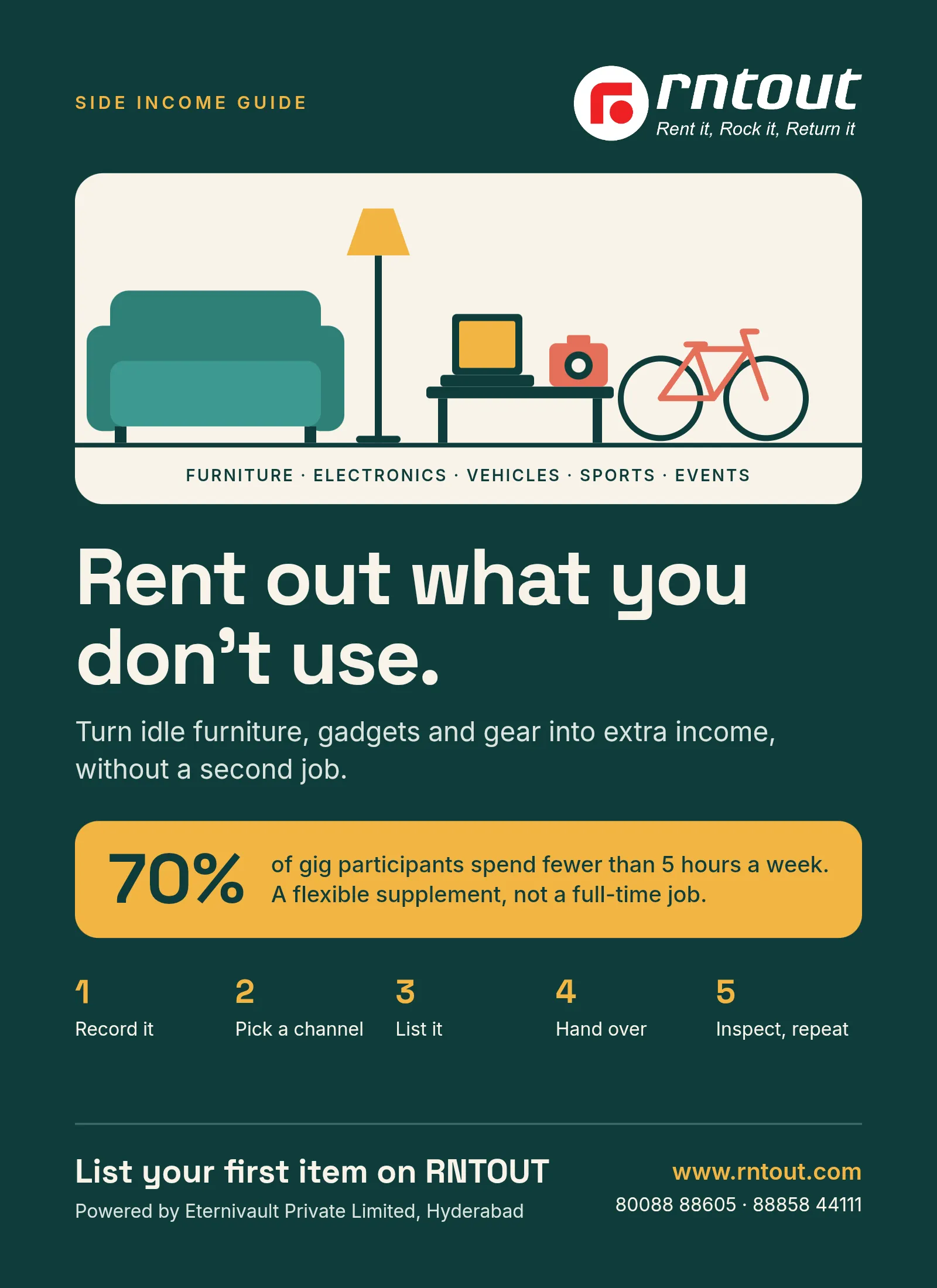
Turn the things gathering dust at home into a steady side income, without turning it into a second job.
Most homes hold at least a few items that are used rarely: a spare piece of furniture, a camera, a treadmill, party supplies, or a laptop from an earlier upgrade. Renting them out lets those items earn instead of sit idle. This guide explains what to expect, how to start, where to list, and how to stay protected.
Set your expectations before you work out the numbers. The Federal Reserve’s 2024 SHED report found that 20% of U.S. adults did some gig activity in the previous month. Of these, 13% sold items and 2% offered short-term rentals of property or vehicles.
The time commitment is modest. Among gig participants, 70% spent fewer than five hours a week, and 96% spent under 35 hours. Only 21% called it their main job. Even so, 27% of people who sold or rented items said they would struggle to make ends meet without that income.
The takeaway: rental income can genuinely matter, but for most people it is a flexible supplement, not a full-time job. The survey is US-based, so treat it as a guide to behaviour, not an earnings promise for India.
For each item, note the product name, serial number (if appropriate), purchase date, condition, accessories, normal daily rate, replacement cost, and the dates it will be unavailable. Take clear photos from several angles and record existing marks in a short handover video. This evidence protects both sides and makes your listing more credible.
Test with one item before committing space to a whole fleet. This also shows you which items cost more in maintenance, cleaning, or storage than they could ever earn.
Include the category, clear photos, the pickup or handover arrangements you can actually meet, the minimum rental duration, any security-deposit terms, and what the fee covers. State plainly whether delivery is available, and never promise terms the marketplace has not approved. Vague photos, unclear availability, and promises you can’t keep are the most common causes of avoidable disputes.
Respond quickly. Verify the renter’s identity where the platform supports it, and confirm age or licence requirements for vehicles and specialist equipment. Before handover, document the condition, test the functions, list the included accessories, and get a written agreement.
After return, inspect the item against your record, reset it for the next booking, and leave prompt feedback. Once the process works, save your checklist and handover notes as reusable templates. That keeps a simple side income from becoming an administrative burden.
Choose a channel by audience and friction, not by brand name. Before creating a seller account, ask:
Compare fees across the number of rentals you realistically expect. A platform that charges less but brings no suitable enquiries is not cheaper. Ask the provider directly about prohibited items, age restrictions, identity checks, and dispute evidence, and keep the answers in your listing records. For a high-value item, specialist expertise may matter more than audience size, so confirm support before investing in better photography or extending the item’s availability.
RNTOUT offers a multi-category aggregation route for owners, vendors, and renters. It is powered by Eternivault Private Limited, based in Manikonda, Hyderabad, and uses a zero-inventory model: it does not own the listed goods, but connects individual owners and business vendors with customers. Its pan-India vision starts with major metropolitan and Tier-1 cities, followed by Tier-2 expansion.
Categories include:
Treat trust and condition control as part of the product you are offering.
Use a rental agreement that names the parties, the item, rental dates, fee, deposit, delivery or collection point, permitted use, and cleaning standard. It should also say what happens if the renter cancels, returns late, loses an accessory, or causes damage. Photograph or video the item at handover, record serial numbers of relevant components, and get signatures or an equivalent platform confirmation.
Base the deposit on the realistic risk of loss or damage, not on habit. Never advertise a protection policy the provider has not confirmed. For vehicles, powered equipment, medical items, or other high-risk assets, verify the legal, safety, insurance, and operator requirements before accepting a booking.
If damage goes beyond normal wear, use the agreement, the platform’s process, your insurer, and applicable law, rather than making a public accusation. Evidence collected at the start is usually worth far more than a long dispute after return. For higher-value goods, consider a documented handover with both parties present, or another approved verification method.
Renting out unused products works best when you start small, document everything, and choose a channel that suits your item. Test with one product, refine your process, and then expand. Handled this way, the things you already own can quietly earn their keep.
Ready to start? List your first item on RNTOUT and see how your unused products can work for you.

The Punchline Rent it. Use it. Return it. Repeat. When you rent, you’re not just saving money — you’re saving the planet. It’s a win for your wallet, a win for your lifestyle, and a win for the world
Turn idle furniture into income. Learn how RNTOUT makes renting smarter, cheaper and better for the planet.
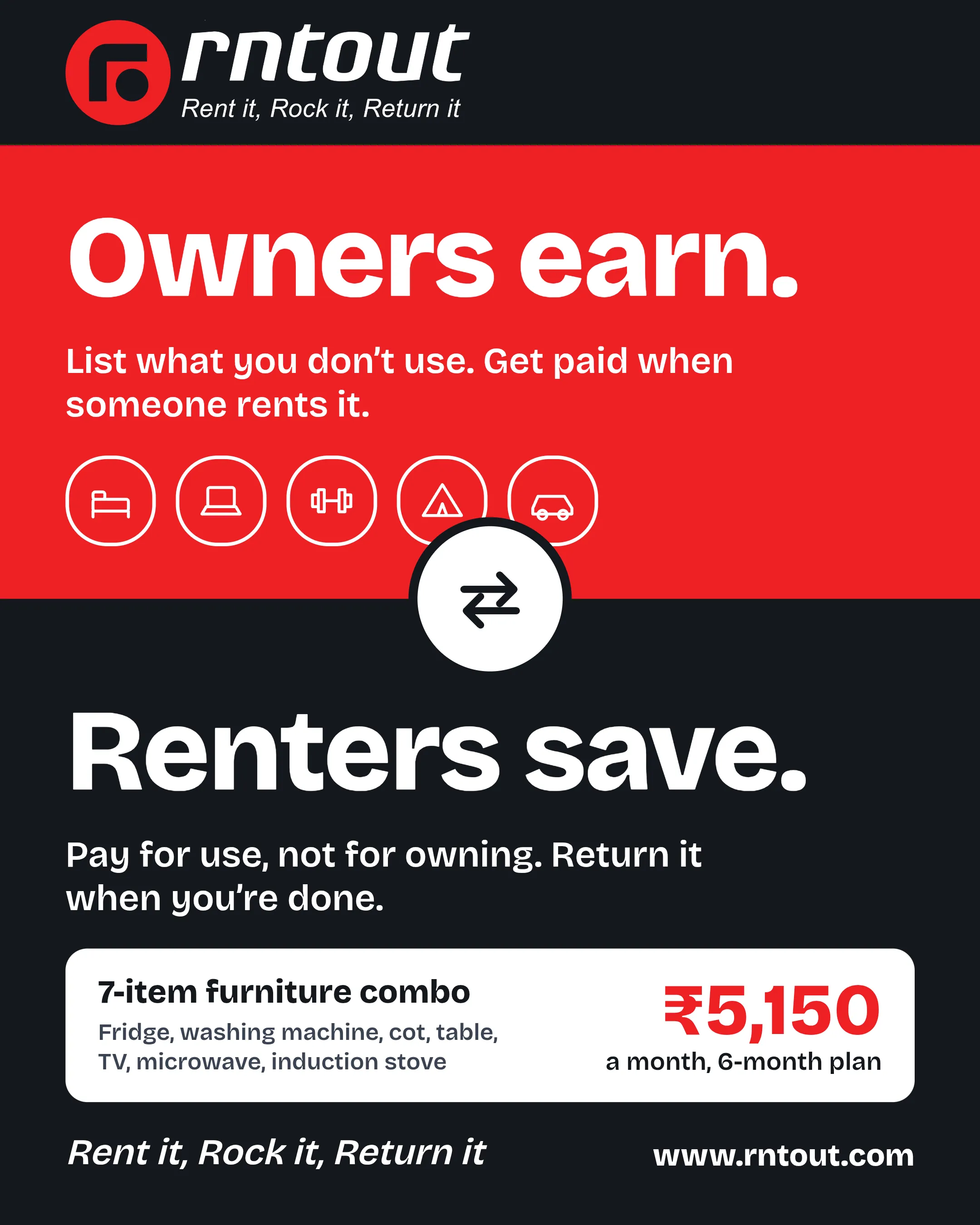
RNTOUT connects owners with idle items to renters who need them for a while. Owners earn, renters save, and every product gets used more.
RNTOUT is India's rental marketplace for everything: rent what you need, earn from what you own. See how it works and how to start.
Compare product rentals across India by the full cost, usable rental period and return terms. Use a renter-side checklist before deciding to rent or buy.
Never miss out on a deal or an update.